
How Much Risk Can You Really Handle?
Investors are often asked whether they are conservative, balanced or growth-focused. The label can make risk sound like a fixed personality trait. In reality, risk has several dimensions: how much loss you can financially afford, how much volatility you can emotionally tolerate and how much time the money has to recover.

This is where investing becomes less about finding a fashionable answer and more about making a decision that fits an actual human life. Risk is easy to accept in a questionnaire and much harder to live with when the balance falls. The numbers matter, but so do your obligations, confidence, time frame and ability to stay with the decision when life becomes complicated.
Capacity and tolerance are different
A person with a long time frame may have financial capacity for market risk but still panic during falls. Another may feel emotionally comfortable with risk but need the money too soon to accept it. A strategy must respect both realities rather than treating confidence as capacity.
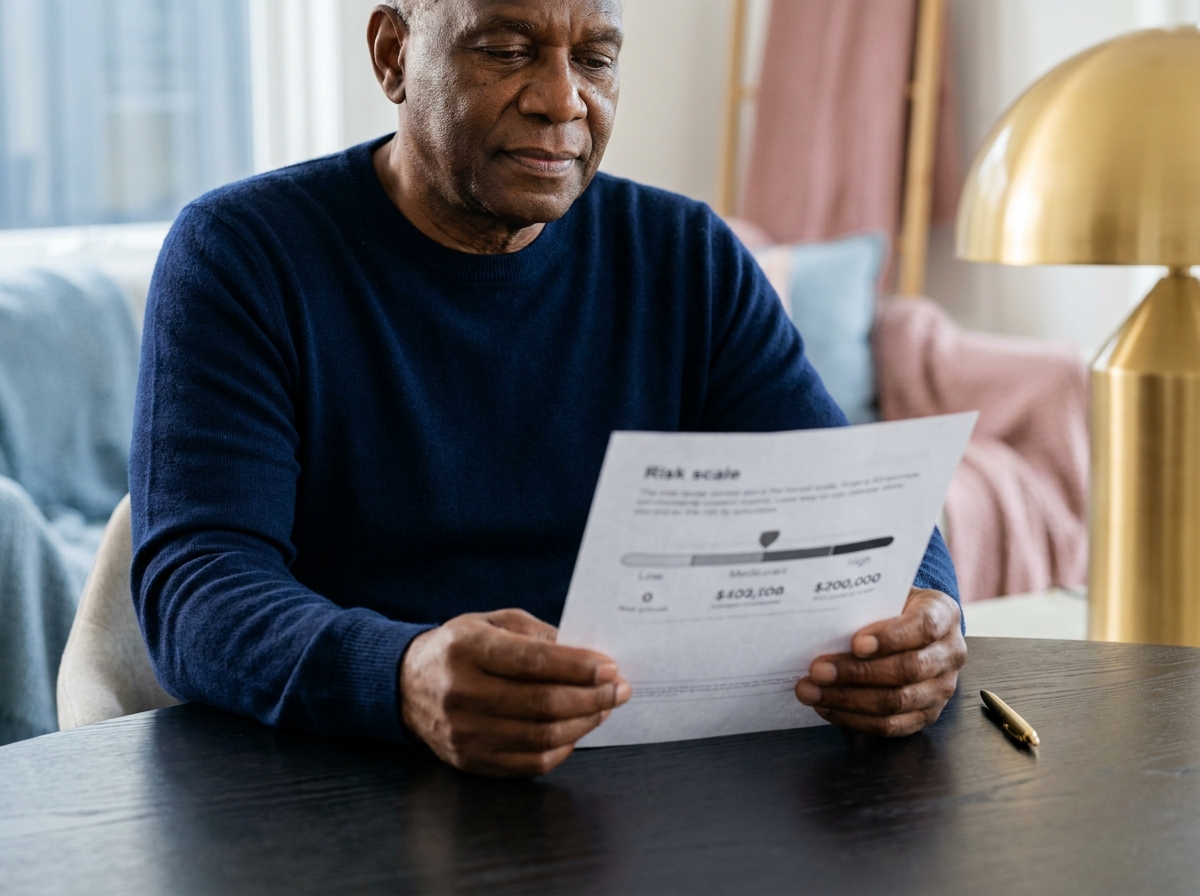
Imagine the loss in dollars
Percentages can remain abstract. Translate a plausible fall into dollars and imagine seeing that balance for months or longer. Would you continue contributing, hold, sell or lose sleep? Your answer is not a moral test. It is information that should shape the plan.
There is also an emotional layer that is easy to overlook. Investing can stir up fear of getting it wrong, embarrassment about what you do not know and pressure to catch up with people who appear further ahead. Those feelings are real, but they should not be allowed to decide what you buy, how much you commit or when you change direction.
Risk exists outside markets too
Holding everything in cash may reduce short-term volatility while creating inflation and longevity risks. Concentrating wealth in one property or company creates another exposure. The goal is not to remove all risk. It is to accept risks you understand in pursuit of goals that matter.
Bring the decision back to four practical lenses: the emotion you are experiencing, the implications for your everyday life, the financial consequences and the longer-term view. A choice can look attractive in isolation and still be wrong for the wider life it has to support.
Good investing behaviour is often unremarkable. It involves reading, asking questions, allowing for uncertainty, keeping records and reviewing decisions at sensible intervals. It rarely requires constant action. In fact, the pressure to do something immediately is often a reason to slow down and check what is driving the urgency.
If you decide to seek advice, arrive with your questions and expect clear explanations. Professional support should help you understand your choices; it should not require you to surrender your voice. You remain entitled to know what is being recommended, why it may fit, what it costs and what could go wrong.
One final point is worth remembering: an investment decision should never be viewed separately from the rest of your finances. Housing, debt, emergency savings, insurance, family responsibilities and future income all affect the uncertainty you can reasonably carry. The same investment may play a different role for two people because their lives are different. Comparison can provide information, but it cannot provide your answer.
A conversation worth having
Before making the next decision, ask yourself:
- When will I need the money?
- What dollar fall could I tolerate?
- How did I behave during past uncertainty?
- Which risks am I taking by avoiding markets?
The best risk level is not the most courageous one. It is the level that gives your plan growth potential without making you abandon it when discomfort arrives. The honest answer is far more useful than the answer you think a capable investor should give.
An appropriately qualified financial adviser can help assess risk within your complete circumstances.
This article contains general information only and does not provide personal financial, investment, legal, tax or lending advice. Consider your circumstances and seek appropriately qualified professional advice before making investment decisions.